Premium Microcement Flooring in Karachi: What Nobody Tells You
By
DynaMeld
June 26, 2026
10
min read
Renovation
Last updated:
June 26, 2026
10
Minute Read
Microcement Flooring in Karachi: What Nobody Tells You Before You Install
Microcement flooring sounds like a no-brainer: no grout lines, no tiles shifting after two monsoon seasons, no fuss. So why do so many Karachi homeowners end up with cracked, chalky, or delaminating floors six months after installation?
Because most of what’s written about microcement online is written by the people selling it. This guide isn’t. We’ll cover what microcement actually costs in Karachi right now, which finishes hold up against the city’s coastal humidity, what installers rarely disclose upfront, and the exact questions to ask before anyone touches your floor.
What Microcement Actually Is ?
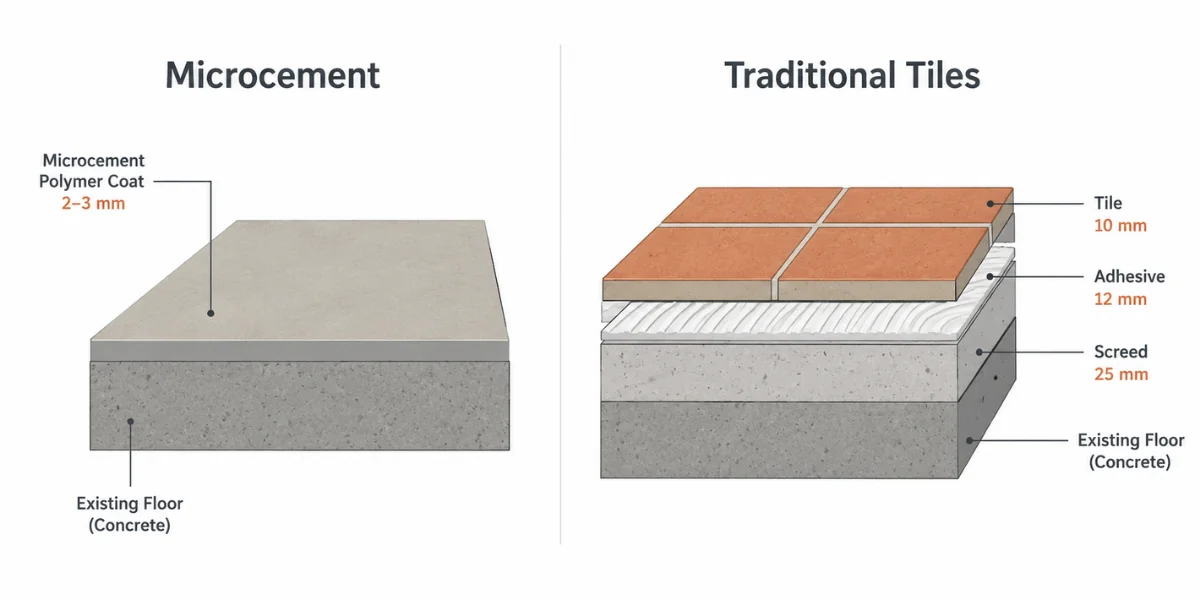
Microcement — also called microconcrete or microtopping — is a polymer-modified cement coating applied in thin layers, typically 2–3mm total. It bonds directly to almost any sound surface: existing tiles, concrete screed, plasterboard, even wood. No demolition, no new substrate, no months of dust.
What it is not is concrete. That distinction matters in Karachi’s climate. Polished concrete is cast in place at 100mm+ depth, giving it mass and thermal stability. Microcement is a surface coating. Its performance depends almost entirely on:
The quality of the polymer-cement system used
The skill of the applicator (hand-applied in multiple passes — there’s no machine that makes it consistent)
The sealer chosen for the specific environment
A poorly mixed batch, a rushed applicator, or the wrong sealer for a high-humidity bathroom, and you have a floor that looks stunning on day one and chalky by month six. That’s not a product problem — it’s an execution and specification problem. And in Karachi’s still-developing microcement market, execution varies wildly.
Why Karachi Homes Are Switching — The Real Reasons {#why-karachi}
The Instagram-worthy seamless look drives the initial interest. But the practical reasons Karachi homeowners and commercial clients are actually converting are more local than aesthetic:
Tile grout is a losing battle in Karachi. The combination of coastal humidity, salt air, and temperature swings — from 40°C summer heat to wet monsoon floors — turns grout dark and mouldy within two to three years. Microcement eliminates grout lines entirely.
Renovation without demolition. Karachi apartment buildings, particularly older stock in PECHS, Clifton, and Gulshan-e-Iqbal, often can’t handle the vibration and debris of a full tile demolition. Microcement applied over existing tiles adds less than 3mm of height — typically no door frame adjustment needed.
Commercial spaces are setting the pace. The boutique cafés on Zamzama, the co-working spaces in Shahrah-e-Faisal, the luxury retail in Dolmen Mall — microcement dominates these interiors because it photographs well, ages gracefully, and handles foot traffic without the grout maintenance headache. Residential clients see it and want it at home.
DHA and Bahria Town construction timelines. Developers in Phase 8 and Bahria Town Karachi are specifying microcement as a premium finish option because it’s faster to apply over concrete screed than laying large-format tiles in complex patterns.
Side-by-side diagram comparing microcement 3mm layer over existing surface versus traditional tile installation with screed, adhesive, and tile layers totalling 40mm+
Microcement Cost in Karachi: A Realistic Breakdown {#cost}
This is where most guides go vague. Here is what the market actually looks like in mid-2025:
Finish Type
PKR per sq ft
Best For
Basic microcement (walls or floors, single colour)
PKR 450–650
Bedrooms, utility areas
Mid-range with custom colour + 2-coat sealer
PKR 650–850
Living rooms, offices
High-end designer / metallic / textured
PKR 850–1,200
Bathrooms, feature walls, hospitality
Exterior or rooftop (requires UV-resistant sealer)
PKR 900–1,400
Terraces, outdoor areas
What drives the cost up in Karachi specifically:
Applicator scarcity. There are fewer trained microcement applicators in Karachi than in Lahore or Islamabad. Certified applicators charge a premium — and rightly so, because the skill floor is higher than tiling.
Sealer quality. A polyurethane or epoxy topcoat sealer rated for high-humidity environments adds PKR 80–150 per sq ft versus a basic acrylic sealer. In Karachi bathrooms, the humidity-rated sealer isn’t optional.
Surface prep. If your existing surface has cracks, unevenness, or old adhesive residue, prep work can add 20–35% to the total cost. An honest installer quotes this upfront after a site visit; a cheap one skips it and you pay later.
Realistic project examples:
400 sq ft living room and dining area, mid-range finish: PKR 260,000–340,000
60 sq ft bathroom (walls + floor), high-end waterproof finish: PKR 54,000–72,000
1,000 sq ft commercial café fit-out: PKR 700,000–1,100,000
These numbers assume professional application with proper prep and sealing. If a quote comes in 40% below this range, ask exactly what the sealer specification is and whether surface prep is included. Often it isn’t.
Where Microcement Works Brilliantly in Karachi {#where-it-works}
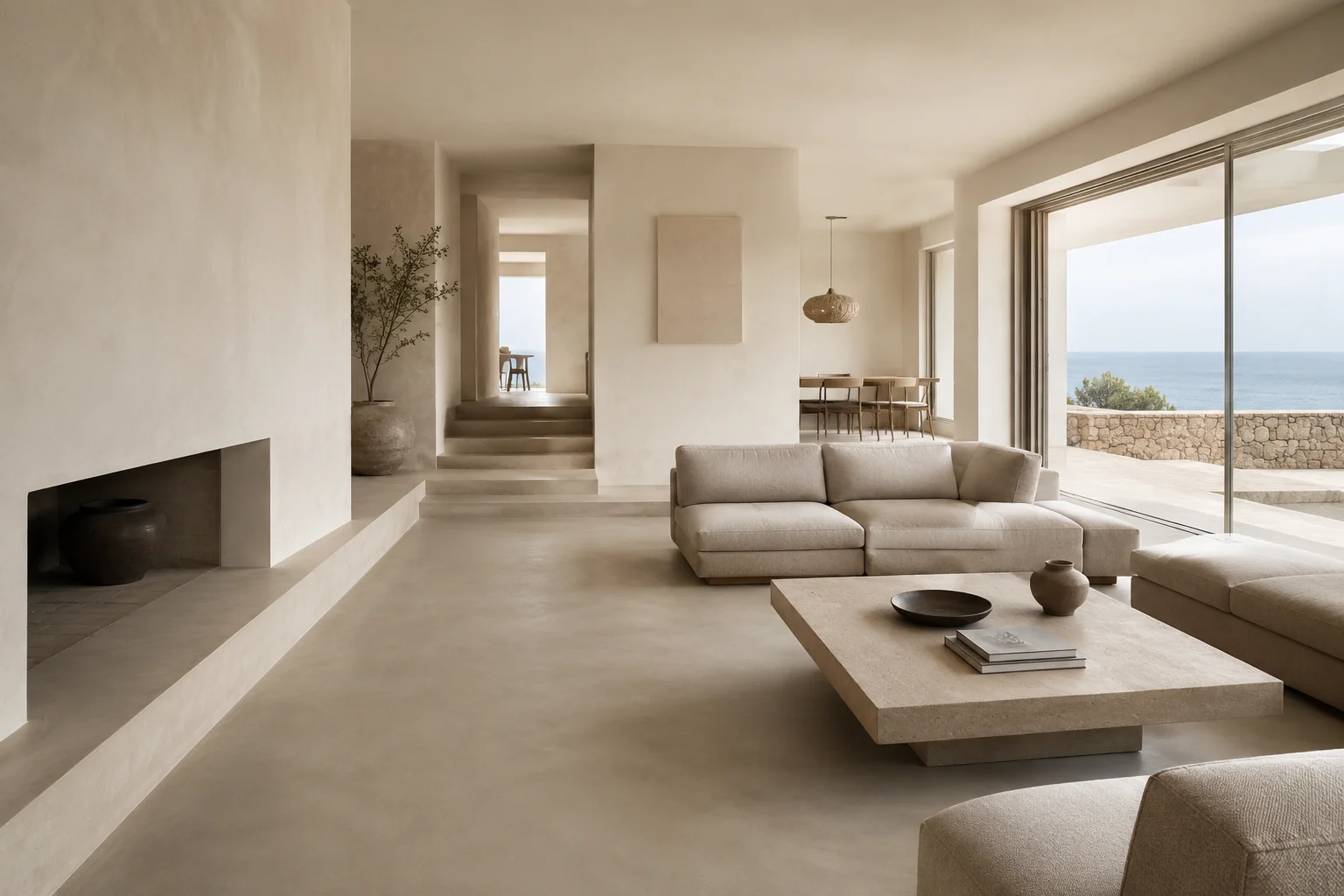
Living rooms and open-plan areas. The seamless surface makes mid-sized apartments in Clifton and PECHS read as larger. No grout grid cutting up the visual field. Matte finishes in warm greige or concrete grey are the current sweet spot for Karachi’s modern interior aesthetic.
Commercial floors with heavy foot traffic. Properly sealed microcement is harder than many tiles and handles Karachi’s dusty foot traffic without showing wear patterns for 8–12 years if maintained correctly. It doesn’t hollow-sound underfoot the way large-format porcelain can.
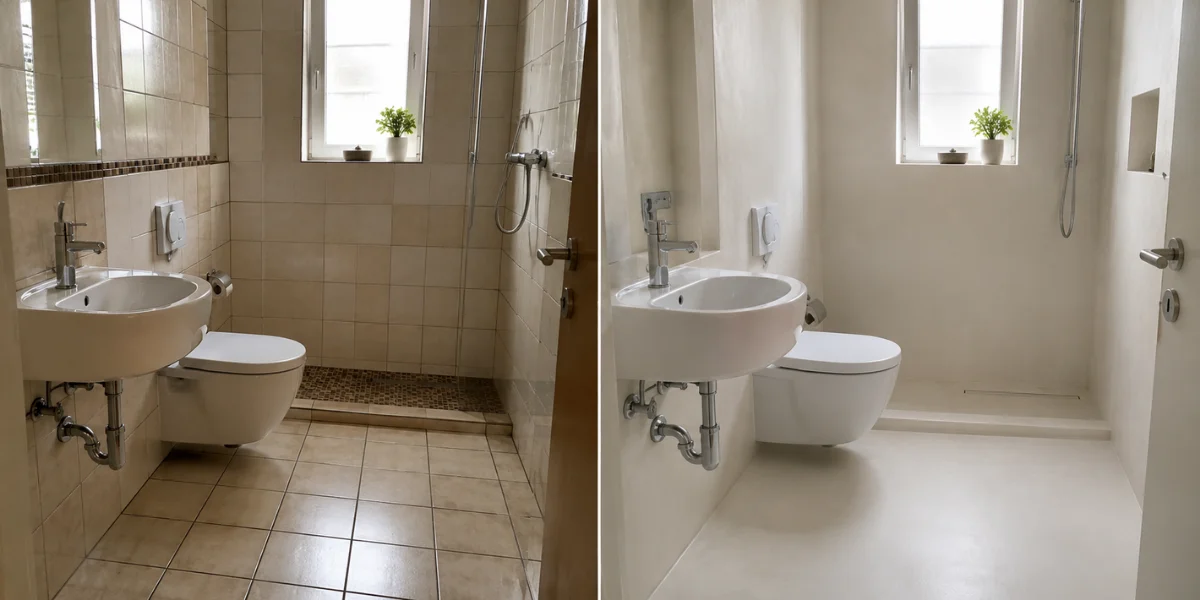
Bathroom walls (not always floors — see below). Microcement bathroom walls with a gloss or satin polyurethane sealer create a completely waterproof, grout-free surface. Easier to clean, no mould hiding in grout lines, and the continuous surface works particularly well in small Karachi bathrooms where every visual trick counts.
Staircases. Microcement on stairs eliminates the cracked edges and staining that happen to tiled stairs in high-use Karachi homes. Applied with a non-slip additive in the sealer, it’s code-compliant and looks sharp.
Rooftop terraces (with the right spec). With a UV-stable polyurea or polyurethane sealer, microcement handles Karachi’s direct sun exposure well. It does require re-sealing every 2–3 years outdoors versus 4–6 years indoors.
Before and after comparison of a Karachi apartment bathroom — left shows dark grouted tiles, right shows seamless white microcement with no grout lines
Where Microcement Fails in Karachi {#where-it-fails}
This is the section installers skip in their brochures. Read it carefully.
Bathroom floors with standing water and no slope. If your bathroom floor doesn’t drain completely — common in older Karachi flat construction where floor slopes were poured incorrectly — microcement will delaminate at the edges over time as water sits at the perimeter. Tiles with silicone-sealed grout actually handle this better. Fix the slope first, or choose a different material.
High-movement substrates. Microcement has low crack-bridging ability. If your concrete screed or substrate moves — thermal expansion in Karachi’s summer heat, structural settling in older buildings — cracks telegraph through the microcement. A glass-fibre mesh embedded in the base coat mitigates this but doesn’t eliminate it. Always ask your installer if they’re using mesh reinforcement.
Areas with domestic helper foot traffic in wet chappals. This sounds specific, but it’s a real Karachi use-case. Repeated wet rubber or plastic sole contact on improperly sealed microcement causes surface scuffing over 2–3 years. A hardened polyurethane sealer (not acrylic) solves this — but again, only if specified upfront.
Outdoor areas without UV-rated sealers. Basic microcement sealers yellow and chalk under Karachi’s direct UV exposure within 12–18 months. If anyone quotes outdoor microcement without specifying a UV-stable topcoat, that’s a red flag.
Direct application over weak or hollow tiles. If existing tiles have hollow spots underneath, microcement won’t compensate — the hollow will transmit underfoot and eventually crack. A tap-test (literally knocking on tiles) should be part of every site survey. Not every installer does it.
How to Find the Right Microcement Installer in Karachi
The microcement market in Karachi is growing fast, and the skill gap between applicators is significant. Here’s how to filter:
Ask for a physical sample panel, not photos. Photos can be sourced from anywhere. A 30×30cm sample panel applied on site, in the colour and finish you want, shows you the actual execution quality and lets you feel the texture. Any installer confident in their work will do this.
Ask for the brand and datasheet of the microcement system they use. European systems (Topcret, Duresin, Satine) and quality Pakistani polymer-cement blends both exist in the market. You want the installer to name the system and show the product datasheet — not vague answers like “Italian import quality.” The datasheet will specify minimum film build, cure time, and sealer compatibility.
Ask specifically what sealer they plan to use for your environment. For a bathroom: you need a two-component polyurethane or epoxy sealer rated waterproof. For high-UV outdoor areas: polyurea or aliphatic polyurethane. For a living room: single-component polyurethane is fine and easier to re-apply. If the installer gives you one sealer answer for all applications, they’re cutting corners.
Check if surface prep is itemised in the quote. A professional quote separates: surface prep, base coat application, finish coat, sealing. If it’s a single lump sum with no breakdown, ask for the breakdown in writing before signing.
Red flags to walk away from:
“We can start tomorrow” — quality applicators are booked 2–4 weeks out in Karachi right now
No site visit before quoting
Quote significantly below market rate with no explanation
Unwillingness to show a local completed project you can visit in person
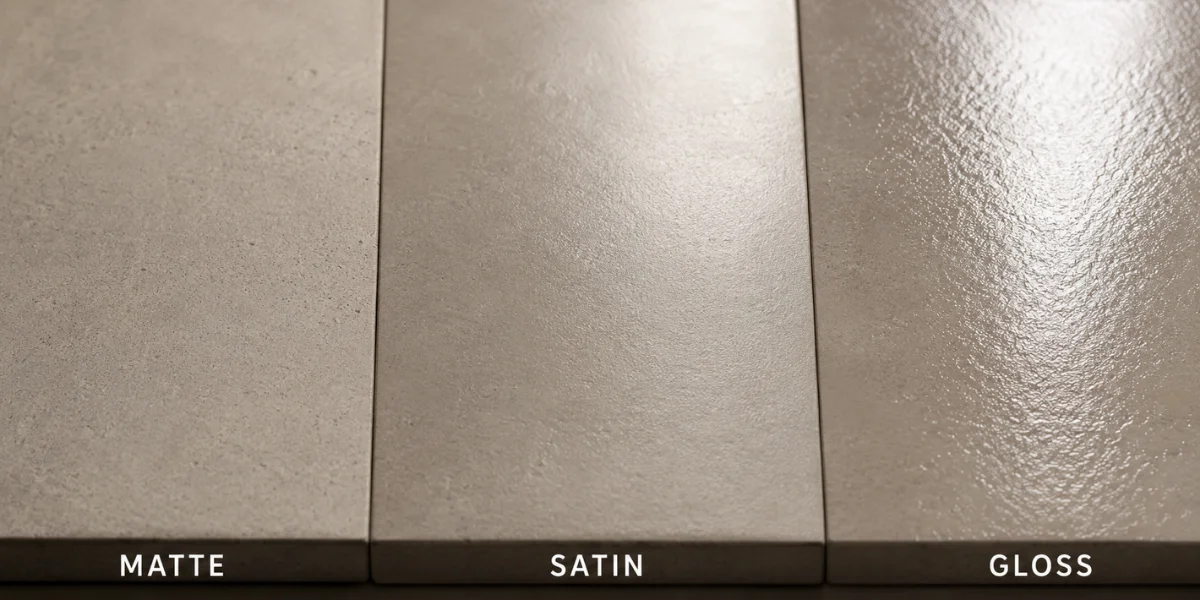
Close-up comparison of three microcement finish types — matte (left), satin (centre), and gloss (right) — showing how each reflects light differently
FAQ
How long does microcement flooring last in Karachi? With professional installation and a quality polyurethane sealer, interior microcement floors last 10–15 years before needing re-sealing. The sealer itself needs refreshing every 4–6 years indoors and every 2–3 years outdoors. The microcement substrate underneath, if installed correctly, doesn’t need replacement — only the sealer degrades.
Is microcement slippery when wet in Karachi bathrooms? It can be, if the sealer doesn’t include a non-slip additive. A standard gloss polyurethane sealer on a bathroom floor is genuinely dangerous when wet. Always specify a non-slip additive or an anti-slip textured finish for bathroom floors. This is standard practice for professional installers — if yours doesn’t mention it, bring it up explicitly.
Can microcement be applied in Karachi’s monsoon season? Yes, but with caveats. Microcement requires temperatures between 10°C and 35°C and relative humidity below 85% during application and the first 72-hour cure window. Karachi’s monsoon months (July–August) push humidity above that threshold on wet days. Good installers will monitor conditions and plan work accordingly. Rushing application during a humid spell is a common cause of adhesion failures.
How does microcement compare to epoxy flooring for Karachi homes? Epoxy is harder and more chemical-resistant — it’s the right call for garages, utility rooms, and commercial kitchens. Microcement looks more natural and architectural, handles colour variation better, and is easier to repair locally if damaged. For living spaces in Karachi, microcement is almost always the better aesthetic choice. For functional or wet-heavy industrial uses, epoxy wins.
What maintenance does microcement need in Karachi’s dusty environment? Daily: sweep or vacuum with a soft brush — Karachi’s dust and fine sand will scratch unsealed or under-sealed surfaces if left to accumulate and walked on. Weekly: damp mop with a pH-neutral cleaner (avoid acidic or bleach-based products — they degrade the sealer). Every 4–6 years: re-apply sealer. That’s it. No polishing, no waxing, no grout cleaning.
The Bottom Line
Microcement flooring works exceptionally well in Karachi when it’s specified correctly for the environment and installed by someone who knows what they’re doing. The city’s coastal humidity, the age of its residential building stock, and the specific use patterns of Karachi homes all create conditions that favour some specifications and punish others.
The difference between a microcement floor that looks good for fifteen years and one that starts peeling by year two isn’t the material — it’s the sealer specification, the substrate prep, and the applicator’s skill. Get those three right, and it’s one of the best flooring choices available in Karachi today.
Get a Professional Microcement Assessment in Karachi
If you’re based in Karachi and want a site visit from an experienced microcement team, Tradex International is one of the established names in the market. Based in DHA Phase 5, they work across residential and commercial projects in Karachi, Lahore, and Islamabad, and their applicators are trained in proper system specification — which is the part that matters most.
Tradex International 2nd Floor, Plot 30, Eve, Saba Ave, DHA Phase 5, Karachi 75500, Pakistan
They offer on-site consultation and can provide physical sample panels — which, as covered above, is exactly what you should be asking any installer for before committing.